Service · Asphalt
Asphalt Paving in Painesville & Northeast Ohio
Hot-mix asphalt driveways, private roads and full resurfacing installed by a family-run crew that shows up when they say they will.
A good asphalt driveway is the first thing people see when they pull up to your home, and in Northeast Ohio it has to survive freeze-thaw cycles, road salt, plow blades and hot summer sun. That combination is brutal on a driveway, which is why the difference between a paving job that lasts 25 years and one that fails in 5 almost always comes down to base preparation, mix quality and compaction.
Rendon Paving installs hot-mix asphalt for homeowners and businesses across Painesville, Willoughby, Eastlake, Concord Township, Kirtland, Wickliffe, Chardon, Chesterland, Mayfield Heights, Shaker Heights, Cleveland Heights and the Cleveland Metropolitan Area. Every project uses fresh mix hauled straight from the plant, the same compaction equipment used on state road jobs, and a crew that has been doing this work together for years.
Whether you need a new driveway, a full-depth replacement, or an overlay to breathe life back into a tired surface, this page walks through exactly how we approach the work, what materials we use, and what you can expect.
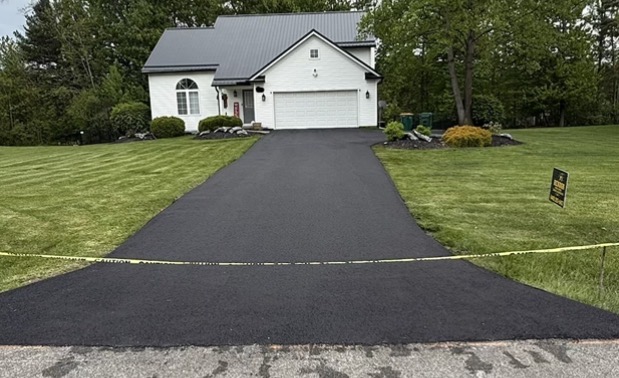
Our Asphalt Paving Process
We follow the same disciplined sequence on every job, from a 400 square foot residential driveway to a 20,000 square foot commercial pad. Cutting corners on any single step is what causes failures later, so we don't.
1. Site walk and measurement. We meet you on site, listen to what you want, look at how water moves across the property, check for soft spots, and hand-measure the area. You get a written estimate that lists thickness, base depth, drainage notes, and price with no vague line items.
2. Excavation and tear-out. On replacements we saw cut clean edges, excavate the old surface, and haul it off for recycling. On new construction we dig to the depth needed for a stable subgrade, usually 8 to 12 inches below finished grade.
3. Base preparation. The subgrade is proof-rolled to find soft areas, geotextile fabric is added where soils are weak, and a compacted stone base (typically #304 limestone) is placed and rolled in lifts. A properly built base is 70% of what determines lifespan.
4. Paving. Hot-mix asphalt is delivered at 275 to 325 degrees and laid with a mechanical paver at the correct thickness. For most driveways we place a 2-inch base course, then a 1-inch surface course of finer mix for a smooth finish. Single-lift installs are only used where design allows.
5. Compaction and edge work. A steel-drum roller and vibratory plate compactor lock the mix in place while it's still hot. Edges are beveled at roughly 45 degrees so they resist chipping and snow-plow damage. Then we clean up, sweep, and walk the finished surface with you.
New Installation vs. Resurfacing vs. Full Replacement
Not every driveway needs to be torn out. Choosing the right approach saves money and often lasts longer than a wrong-fit repair.
New installation is for driveways being built for the first time, additions to an existing driveway, or properties where the previous surface was gravel or dirt. This is the most involved option because we're building the base from scratch.
Resurfacing (overlay) means laying 1.5 to 2 inches of new asphalt over an existing surface that is still structurally sound. It's a great option when the base is solid but the top course is faded, cracked, or oxidized. Overlays are faster, less expensive, and typically add 10 to 15 years to the driveway.
Full replacement is the answer when the base has failed. Signs include potholes that keep coming back after being patched, alligator cracking across large areas, or standing water that won't drain. Overlaying a failed base is throwing money away, so we'll say so.
Asphalt Paving Across Lake County, OH
Lake County sits right on the edge of Lake Erie, which means our driveways and parking lots take a harder hit than most of Ohio. Lake effect snow adds extra freeze thaw cycles every winter, and the clay heavy soil common throughout the county holds water instead of draining it away. Both of those work against a poorly built base, which is why we spend extra time on drainage and compaction on every Lake County job.
We pave residential driveways, private roads, and commercial lots throughout Lake County, including Painesville, Concord Township, Willoughby, Eastlake, Kirtland and Wickliffe. If you're not sure whether your property falls in our service area, call us. We cover most of Lake County and a good chunk of Geauga and Cuyahoga County too.
- Local knowledge of Lake County soil and drainage conditions
- Based in Painesville, so response times across the county are fast
- Same crew, same materials, same 1 year warranty on every Lake County job
Signs Your Driveway Needs Attention
- Alligator or web cracking that covers large sections
- Potholes that reopen every spring
- Standing water more than 24 hours after rain
- Faded, gray, brittle surface with loose stone
- Crumbling edges from snow plows or vehicle turnout
- Sinking or dips where soft soil has settled
Choosing an Asphalt Contractor in Northeast Ohio
Not every asphalt contractor builds a driveway the same way, and the difference usually doesn't show up until year 3 or 4, after a cheap base starts to fail. A few things worth checking before you hire anyone:
License and insurance. Ask to see both before work starts. A legitimate asphalt contractor will hand this over without hesitation.
Base preparation, not just the top coat. Ask what depth of aggregate base they install and whether they proof roll for soft spots. If a contractor can't answer this clearly, that's a red flag.
A written warranty. Verbal promises don't hold up. Get the warranty length and what it covers in writing before you sign anything.
Reviews that mention the process, not just the result. Look for reviews that talk about communication, timeliness, and cleanup, not just "driveway looks great." That tells you how the contractor operates on site.
A real local address and phone number. Asphalt companies near you should have a physical presence in the area, not just a call center forwarding calls somewhere else.
Rendon Paving is licensed and insured, handles our own base prep in house, and backs every project with a written 1 year warranty. Talk to our crew directly at (440) 283-9457.
Asphalt or Concrete, Which Is Right for Your Driveway?
Both hold up well in Northeast Ohio, but they solve different priorities.
Choose asphalt if: you want a lower upfront cost, faster install (drivable in 24 to 48 hours), and a surface that's easier and cheaper to repair down the road. Asphalt also handles freeze thaw cycles slightly better than concrete.
Choose concrete if: you want a longer lifespan (30 to 40+ years versus 20 to 30 for asphalt), lower long term maintenance, and a cleaner look that holds up longer before it needs attention.
There's no wrong answer, it depends on your budget and priorities. We install both, and we'll walk you through an honest side by side comparison for your specific property during your free estimate.
Benefits
- 20 to 30 year lifespan when installed and maintained correctly
- Faster install than concrete, typically drivable in 24 to 48 hours
- Smoother, quieter surface for vehicles
- Lower upfront cost per square foot than concrete
- Easier to repair, patch and overlay down the road
- Improves curb appeal and property value
Materials & Equipment
- Fresh hot-mix asphalt sourced from local Ohio plants
- #304 crushed limestone for compacted aggregate base
- Geotextile stabilization fabric where soils are weak
- Tack coat on all resurfacing to bond old and new asphalt
- Mechanical paver, steel-drum rollers and vibratory plate compactors
- Diamond-blade saw for clean cuts against curbs and garages
Why Choose Rendon Paving
Family-owned and locally operated out of Painesville, so you talk to the crew doing the work.
Licensed and insured with a 1 year workmanship warranty on every project.
We do our own base prep, no shortcuts, no subcontractor confusion.
5.0 stars across Google and Yelp reviews from homeowners across Lake County.
Straightforward written estimates with no surprise add-ons at the end.
We show up when we say we will and clean up the site before we leave.
Frequently Asked Questions
How long does a new asphalt driveway last in Northeast Ohio?+
A properly installed hot-mix asphalt driveway typically lasts 20 to 30 years in our climate. Sealcoating every 2 to 3 years and repairing small cracks early are what push it toward the higher end of that range. Skipping maintenance usually cuts the lifespan in half.
How thick should a residential asphalt driveway be?+
For most driveways in Lake County we install a 6 to 8 inch compacted aggregate base with 3 inches of hot-mix asphalt on top, laid in one or two lifts depending on the design. Heavier vehicles, RVs, or soft soils call for a thicker section, and we spec that during the estimate.
Can you pave over my existing driveway?+
Sometimes. If the existing surface is structurally sound with minor surface distress, an asphalt overlay of 1.5 to 2 inches works well and costs less than a full replacement. If the base has failed, potholes keep coming back, or drainage is bad, an overlay only buys a year or two. We tell you honestly which is right.
How soon can I drive on new asphalt?+
Cars can drive on new asphalt after about 24 to 48 hours. Heavier vehicles, trailers, and RVs should stay off for 3 to 5 days. Full curing continues for 6 to 12 months, so avoid sharp turns from a stopped position and don't leave heavy loads parked in the same spot during hot weather.
What time of year is best for asphalt paving?+
Late April through October is our main paving season. Hot-mix asphalt needs warm ground and warm air to compact correctly. We can pave outside those windows on smaller residential jobs when the weather cooperates, but scheduling in the shoulder months means less flexibility if it rains.
Do you handle removal of the old driveway?+
Yes. Full-depth replacement includes saw cutting, removing the old asphalt or concrete, hauling it away, and recycling it where possible. We also handle any base repairs the tear-out reveals before we pave.
Related Services
Free Estimates · 1 Year Warranty